What is a Lumbar Intervertebral Disc Herniation?
2026-03-27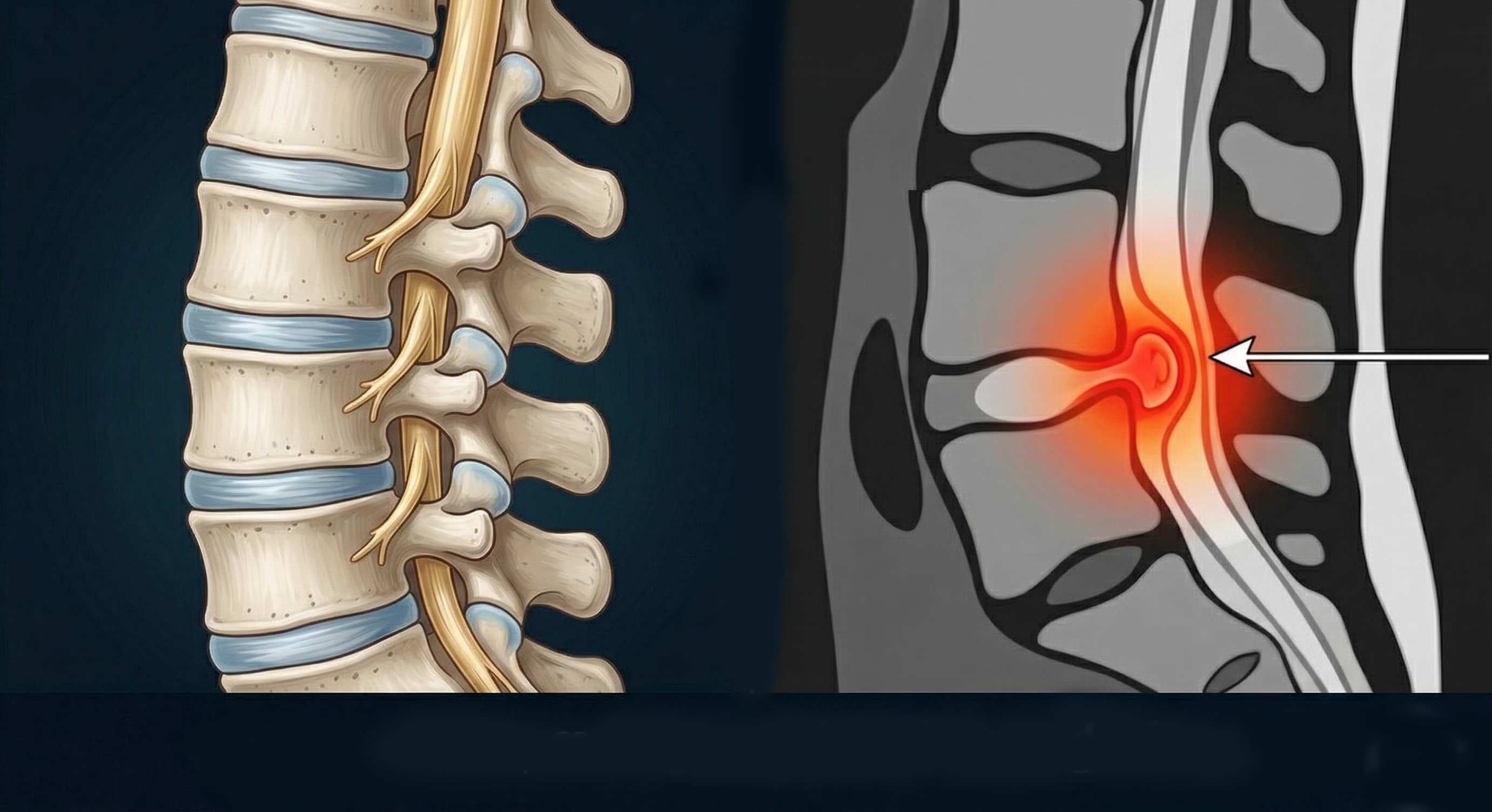
Gemini saiSpecialized shock absorbers called intervertebral discs are located between the vertebrae of the spine. Each disc consists of a dense outer shell (the annulus fibrosus) and a gel-like inner core (the nucleus pulposus).
A disc herniation (also referred to as protrusion/extrusion) occurs when the outer shell is damaged (ruptures) and the inner content (the nucleus) extrudes. This "protrusion" compresses adjacent nerve roots, causing pain and inflammation.
How is it manifested, and how is the diagnosis established?
Primary symptoms include:
-
Sciatica: Sharp, radiating pain that travels from the lower back through the buttock and down the leg.
-
Numbness: A "paresthesia" (pins-and-needles) sensation or loss of sensation in the leg.
-
Weakness: Reduced muscle strength, such as difficulty moving the foot (drop foot).
Diagnostic "Golden Standard": Magnetic Resonance Imaging (MRI) is utilized to determine the precise location and size of the herniation.
Non-Surgical Treatment
Conservative treatment is effective for the majority of patients (80-90%). This is a comprehensive approach aimed at reducing inflammation and restoring spinal function.
Primary methods include:
-
Medications: Anti-inflammatory drugs.
-
Physical Therapy and Exercise: Specialized exercises to strengthen the muscular core.
-
Therapeutic Blockade: Injection of medication directly into the zone of inflammation for rapid effect.
When is Surgery Required?
-
Surgical intervention is considered when conservative treatment (lasting 4-6 weeks) proves ineffective, the pain becomes excruciating, or signs of nerve damage (leg weakness, paralysis) are observed.
-
Modern Methods: Today, priority is given to minimally invasive surgery performed using an operating microscope (microdiscectomy) or an endoscope (endoscopic discectomy). These methods ensure rapid rehabilitation and utilize a minimal incision.
Outcomes and Potential Risks
-
Prognosis: Following minimally invasive surgery, the prognosis is favorable. The majority of patients become pain-free and quickly return to an active lifestyle.
-
Potential Complications: Despite high safety standards, any surgical procedure carries risks, such as infection, hemorrhage, or (rarely) recurrence of the herniation at the same level.
-
Rehabilitation: Adherence to medical recommendations and performance of specific postoperative exercises are essential for a full recovery.